

Dolphins
Species
Mammals
Order
Cetacean
Family
Delphinidae
Endangered
Low risk (Least concern)
The dolphinarium is located in the highest part of Mundomar. Its inhabitants are the Tursiops truncatus species, also known as bottlenose dolphins. The different pools that make up the whole facility have been created to meet the requirements of our dolphins according to their needs. In addition to the pool in which the exhibition takes place, there are breeding pools, a separation pool and a medical pool.
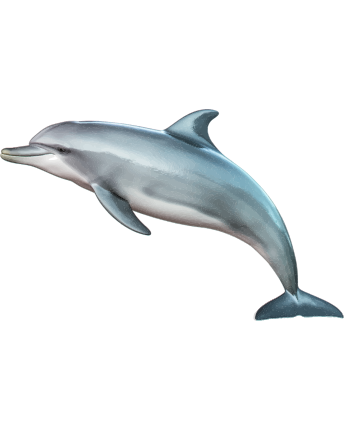
The animals are trained daily by specialised staff. Exercises are carried out so that the dolphins become accustomed to the routine medical behaviours that are performed on them on a regular basis. The dolphins are also trained to perform in a controlled way some of the behaviours that we can observe in their natural environment, such as jumping, making sounds, different forms of swimming..
It has been confirmed that bottlenose dolphins are the second most intelligent animal on the planet, after humans and ahead of the great apes, contradicting what was previously believed. Some characteristics that define the intelligence of these cetaceans are:
Large brain in proportion to the body, larger than that of humans. Bottlenose dolphins have a large brain in proportion to their body, even larger than that of humans.
The existence of a language of clicks and whistles, the exact precision of which is unknown.
Self-recognition in a mirror (mirror test).
Ability to learn a simple gesture language, by which they can obey commands.
Use of tools: females use sponges to cover their snouts and to protect themselves when feeding. This tradition, which is passed down from mother to daughter, indicates that there is a certain culture among bottlenose dolphins.bottlenose dolphins have highly sensitive and regenerative skin, which allows them to heal quickly from superficial wounds.
Their social structure is complex, being organised in groups called herds, which can vary in size from a few individuals to several hundred.
Bottlenose dolphins swim at a speed of 5-11 km/h (3-6 knots); in short times they can reach top speeds of 35 km/h (21 knots).
Their sleep is thus very light; some scientists have suggested that the two halves of their brains take turns sleeping and waking.
Every 5-8 minutes, dolphins have to surface to breathe through their blowhole (on average, they breathe more often).
Like other dolphins, they use echolocation to locate their food and often cooperate with each other to corner their prey.
Bottlenose dolphins are known for their ability to perform acrobatic leaps out of the water, a behaviour that may be related to communication, navigation and parasite removal.
Social interaction is crucial for dolphins, and they spend much of their time playing, hunting and travelling together.
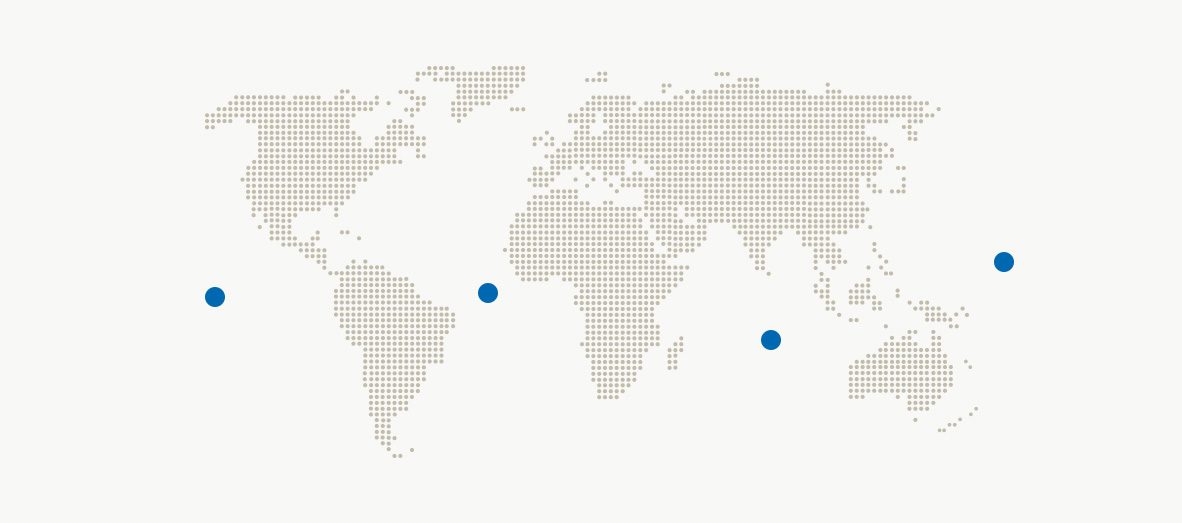
Bottlenose dolphins inhabit temperate and tropical waters around the world. They prefer coastal areas and relatively shallow waters, but can also be found in the open ocean.
They are highly adaptable and can be found in a variety of environments, from estuaries and bays to continental shelves.
Dolphins feed on a wide variety of fish, octopus and squid. Under human care, mostly North Atlantic fish are used to maintain the same quality and nutritional value throughout the year. Herring, mackerel, blue whiting and squid are the main food sources.
The diet is individualised and the amount and type of fish for each animal varies according to its weight, physical appearance and other specific factors.
Minerals, vitamins and fluids are also included in their diet.
Bottlenose dolphins have demonstrated abilities to understand abstract concepts and perform complex tasks, such as mimicking human behaviour and problem solving.
They have exceptional long-term memory, being able to remember the identity of other dolphins even after years of separation.
The species is known for its friendly nature and curiosity. It is not uncommon for a grebe to be investigated by a group of them. Occasionally, dolphins have rescued endangered grebes by bringing them to the surface, a behaviour they also demonstrate towards endangered members of their own species.
In November 2004, a more dramatic report of dolphin intervention came from New Zealand: a great white shark approached three lifeguards, swimming 100 m offshore near Whangarei. A pod of dolphins, apparently sensing danger from the swimmers, gathered and circled them tightly for forty minutes, preventing a shark attack.
