

Meerkat
Species
Mammals
Order
InsectivoreCarnivore
Family
Herpestidae
Endangered
Low risk (Least concern)
The meerkat (from the Swahili for “rock cat”) (Suricata suricatta) is the name of a small mammal, a member of the mongoose family (Herpestidae) that inhabits the Kalahari and Namib Desert region of Africa.
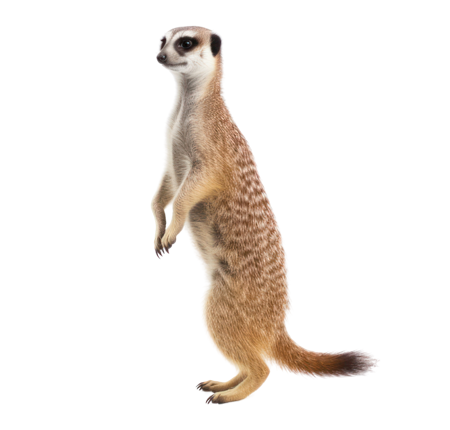
Males have an average weight of 731 g and females of 720 g. The body and limbs of these animals are long and slender with a body and head length of 250-350 mm. The tail is slender and tapered, measuring 175-250 mm. Unlike most mongooses, it lacks abundant fur.
The face is conical in shape ending in a point at the nose and rounded at the back of the head. The ears are small and crescent-shaped. The colour of the coat varies geographically. In the southern part of its distribution the coat colour is darker, with a lighter tint in the more arid regions. Generally the colour is mottled grey, cinnamon or brown with a silver tinge. The nose is brown. The ventral part of the body is partially covered with hair. The claws of the forelimbs are adapted for digging and the tail is yellow-tan with a black tip.
Additionally it has black patches around the eyes. Black bands run across the dorsal region except for the head and tail.
It is a diurnal and social species. They are burrowing animals that live in large underground networks with multiple entrances. They only leave them during the day. The size of the colonies can reach 40 individuals.
Meerkats are primarily insectivorous but also feed on small invertebrates, egg and plant components. They regularly forage for these items by burrowing in the ground, grass, and under rocks. Their diet consists of 82% insects, 7% arachnids, 3% centipedes, 3% millipedes, 2% reptiles and 2% birds.
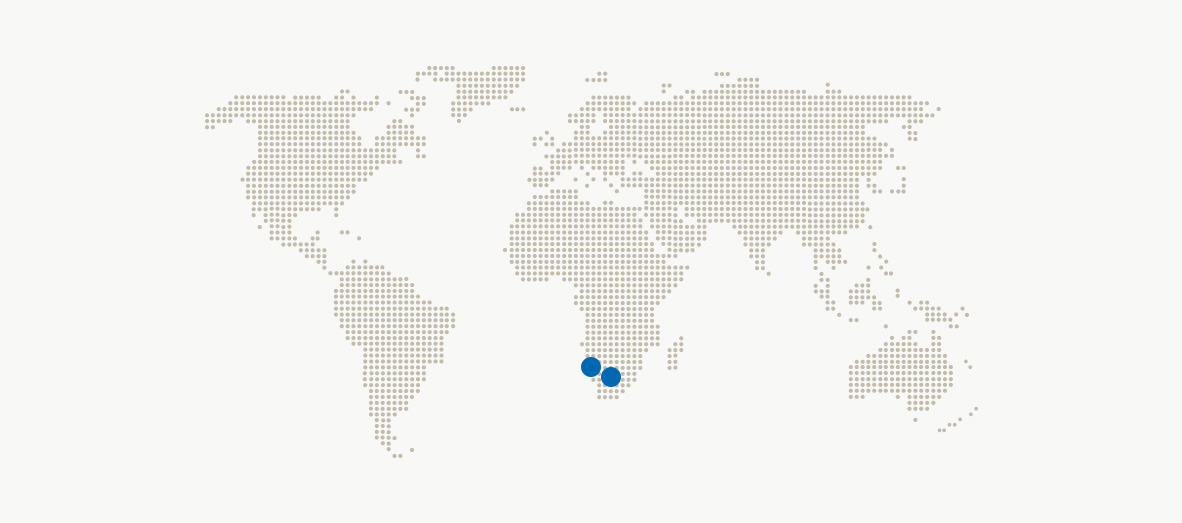
Meerkats inhabit the southern tip of Africa, specifically western and southern Namibia, south-western Botswana and northern and western South Africa; there is a small intrusion in extreme south-western Angola. Also in low-lying areas in Lesotho.
They inhabit more arid and open areas than any other mongoose species. They are found in savannah areas and open plains and their distribution depends on soil type, with a preference for firm, hard ground to settle on.
The species exhibits a variety of strategies against predators. These behaviours include alarm calls, maintaining alertness by positioning the body in an upright position, shelter seeking, defensive warnings, group harassment of a predator, self-defence and protection of young.
During defensive threats and harassment meerkats appear larger than they actually are. An individual may arch its back, appear as tall as possible on all four legs with hair and tail erect and head down. At the same time it moves back and forth, growls, hisses and spits in an attempt to intimidate its enemy. Harassment requires a group of meerkats to exhibit this defensive behaviour simultaneously. If a predator approaches despite these warnings, the meerkat lands on its back with its claws and teeth visible, thus protecting the back of its neck. For aerial predators meerkats most often remain in a burrow in case of imminent attack. It is surprising, however, that adults can protect their young with their own bodies.

