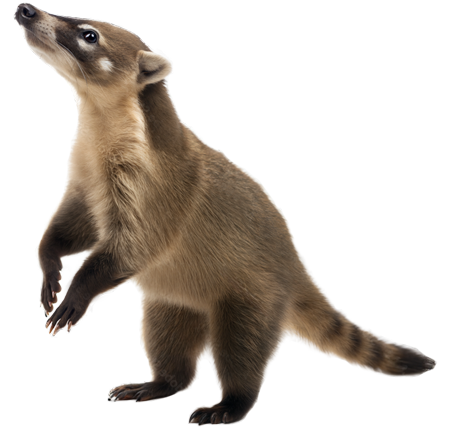
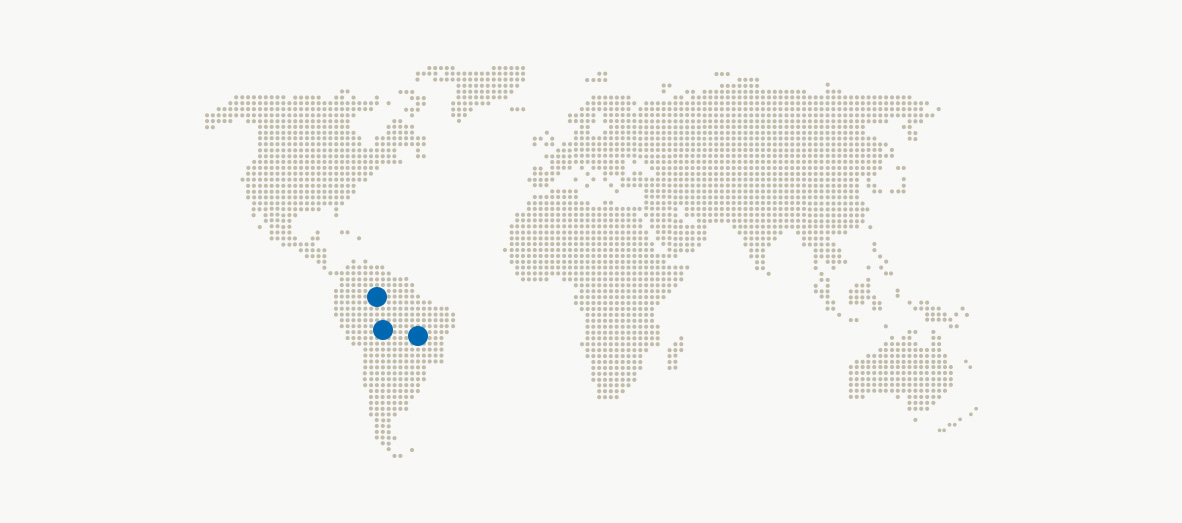
They are diurnal animals that live on the ground and in trees.
They are omnivorous and eat mainly fruits and invertebrates, have a gestation period of 77 days and give birth to 2 to 4 offspring at a time, and are a protected species under CITES Appendix III.
The Coati breeding season is between January and May in some places but can also occur between October and February.
After copulation, the males decide to isolate themselves and the females begin to build their nest in preparation for the gestation period and future parturition.
After the gestation period, which is around 74 / 77 days, females may have 3 to 7 offspring.
Calving takes place between April and June.
The babies are altricial offspring (in zoology, this is the name given to offspring that are born blind, without open ear canals, practically hairless and with very limited mobility), reaching 78 grams five days after birth.
They open their eyes after 10 days and are able to stand up at 19 days, although they will not walk until they are almost a month old. They will start taking solid food after 4 months.
The mother looks after her babies until they are able to walk and jump, at which point they will be introduced to the group, but will care for them until they are four months old.